
Gloss kitchen pvc panels vs Acrylic vs pet
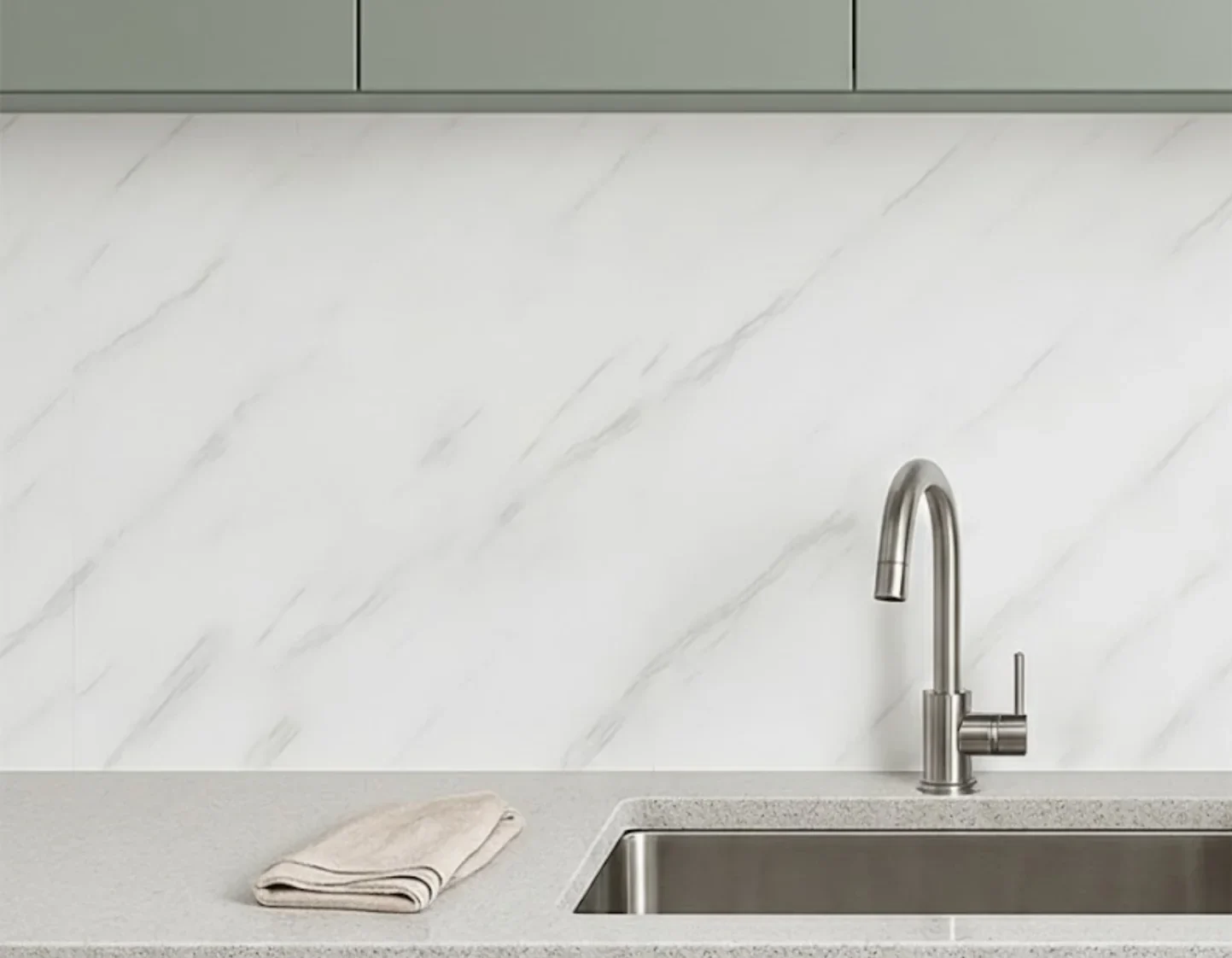
Walk into any showroom in Karachi and the gloss panels all look stunning under the lights. Acrylic, PET and PVC can be almost impossible to tell apart at first glance. Install them in a real kitchen, with steam from the pressure cooker, oil from the tawa and humid sea air coming through the window, and the differences start to show.
This guide compares the three most popular gloss finishes for kitchen cabinets and walls in Pakistan, so you can choose the right one for your budget and the way you cook. If you want the short version, jump to the comparison table.
Quick answer: choose acrylic for the deepest, most premium mirror finish, PET for a busy family kitchen where scratch resistance matters most, and PVC when budget comes first or for areas away from heat.
What a kitchen panel has to survive
Before comparing materials, it helps to know what your shutters are up against. A typical Pakistani kitchen is tougher on surfaces than most:
- Heat and steam from long cooking sessions, pressure cookers and kettles, especially on the shutters either side of the hob.
- Grease that settles on every surface and needs regular wiping.
- Humidity, particularly in coastal cities like Karachi, which affects the board underneath the finish as much as the finish itself.
- Daily wear from rings, keys, utensils and children’s hands.
- Sunlight through kitchen windows, which can fade weaker finishes over time.
A good kitchen panel needs to look great on day one and still look right years later. Here is how each option measures up.
1. Acrylic gloss panels: the premium choice
Acrylic, also known as PMMA, is the material behind the deepest, most glass-like gloss finishes. Our Merino Gloss acrylic panels come in 1mm sheets and 17mm ready boards, in solid colours, glitter finishes and a full marble series.
Why people choose it: acrylic has a naturally high gloss and good colour stability. The PMMA industry association notes that the material is inherently stable in UV light and keeps its original colour and finish for many years, which matters for kitchens that get strong sunlight. It also has low moisture absorption, so the surface itself is not affected by steam.
What to keep in mind: acrylic has good scratch resistance for a plastic, but its surface is not as hard as glass. Acrylic sheet maker ACRYLITE also points out that many glass cleaners should not be used on it, so gentle cleaning keeps it looking new. It is also the highest-priced of the three options.
Best for: main kitchen shutters, islands, tall units and statement walls where you want a true luxury finish.
2. PET gloss panels: the practical all-rounder
PET panels have a glossy surface with an anti-scratch finish, which makes them a favourite for family kitchens that see heavy daily use. Our Merino Gloss PET range comes as 0.35mm sheets and ready boards, in solid shades and marble designs.
Why people choose it: the anti-scratch surface handles everyday knocks better, and PET gives a clean, modern gloss at a lower price than acrylic. It is a strong choice if you love the gloss look but worry about marks.
What to keep in mind: the gloss is bright and smooth, but usually a touch less deep than acrylic. Place the two side by side in our showroom and you will see the difference.
Best for: lower cabinets, drawers, family kitchens, rental properties, and wardrobes in the rest of the home.
3. PVC gloss panels: the budget-friendly option
PVC panels, including our PVC Burraq range in gloss, matt and embossed finishes, are the most affordable way to get a smooth, modern shutter. They are available as 0.35mm sheets and 17mm boards, with a wide choice of colours.
Why people choose it: low cost, a large colour range and easy availability. PVC also handles moisture well, which makes it useful in humid areas.
What to keep in mind: PVC softens at lower temperatures than many other plastics. The PVC industry guide to heat distortion explains this in detail. In a kitchen, that means PVC shutters should not sit right next to the hob or oven without proper clearance or a heat-resistant filler panel.
Best for: upper cabinets away from the cooker, utility areas, store rooms and budget-conscious projects.
Acrylic vs PET vs PVC: side-by-side comparison
| Feature | Acrylic | PET | PVC |
|---|---|---|---|
| Gloss depth | Deepest, mirror-like | High gloss | Good gloss |
| Scratch resistance | Good, clean gently | Best (anti-scratch) | Fair |
| Heat tolerance near hob | Good | Good | Keep clearance |
| Colour stability in sunlight | Excellent | Good | Good |
| Price | Premium | Mid-range | Budget |
| Formats | 1mm sheet, 17mm board | 0.35mm sheet, board | 0.35mm sheet, 17mm board |
| Best for | Feature shutters, islands | Busy family kitchens | Upper units, utility areas |
For a wider view of which products suit kitchens, bathrooms, wardrobes and commercial spaces, see our product and space guide.
Thin sheet or ready board?
Most gloss finishes come in two formats, and choosing the right one saves time and money:
- Thin sheets (0.35mm to 1mm) are pasted onto MDF, plywood or existing shutters. They are ideal for refacing an old kitchen without replacing the carcass, or for cladding a backsplash wall.
- Ready boards (16mm to 18mm) arrive with the finish already applied, ready for your carpenter to cut into doors and panels. They give a cleaner, more consistent result for new kitchens.
All Merino Gloss panels come in the standard 8′ x 4′ sheet size, which keeps cutting simple for carpenters.
Do not forget what is underneath
The gloss finish is only half the story. The board behind it decides how long your kitchen lasts, especially around the sink.
Standard MDF is excellent for dry areas, but it absorbs water through cut edges. Even moisture-resistant MDF is not waterproof, and board manufacturers recommend sealing every cut edge and using PVC-based boards wherever there is direct water contact.
That is why we suggest PVC foam board for under-sink and sink-side units, and good-quality MDF or plywood for the rest of the kitchen. Ask your carpenter to edge-band every exposed edge, and the shutters will stay flat and swelling-free.
How to keep gloss panels looking new
- Leave the protective film on until installation is completely finished, then peel it off.
- Clean with a soft microfibre cloth and mild soapy water.
- Avoid abrasive pads, scouring powders and harsh solvents.
- Wipe grease splashes the same day, before they harden.
- Use handles or gola profiles so hands touch the panel surface less.
Our picks for kitchens
If you are planning a marble-look kitchen, three designs from the Merino Gloss marble series are especially popular:
- Carrara Aureus (MG-9222): soft white marble with fine veining, perfect for bright, airy kitchens.
- Regal Stone Black (MG-9225): deep black gloss for a bold, modern look, beautiful paired with warm wood.
- Midnight Nero (MG-9226): black marble with gold veining for a luxurious statement island.
You can see the full marble range and where each product works best on our Applications page.
Frequently asked questions
Is acrylic better than PVC for kitchen cabinets?
For gloss depth, colour stability and heat tolerance, yes. Acrylic gives a more premium, glass-like finish and handles a working kitchen better. PVC is the better choice when budget is the priority or for cabinets away from the cooker.
Which gloss panel is most scratch resistant?
PET with an anti-scratch surface is the most forgiving for everyday use. Acrylic resists scratches well too, but benefits from gentle cleaning.
Can gloss panels be used near the stove?
Acrylic and PET handle normal kitchen heat well. For any material, keep a sensible gap from the hob and oven, and use a filler panel beside the cooker. PVC in particular should not sit directly next to strong heat.
Can I put gloss sheets on my existing kitchen?
Yes. Thin acrylic, PET or PVC sheets can be pasted onto existing shutters that are flat and in good condition, giving your kitchen a new look without replacing the cabinets.
Need help choosing?
Every kitchen is different, and the best way to choose is to see and feel the finishes in person. Visit our head office in Timber Market, Karachi, get in touch with our team, or message us on WhatsApp and we will help you pick the right panel for your space and budget.
Want to know more about us first? Read our story, or browse more guides on the M.A. Poonawala blog.